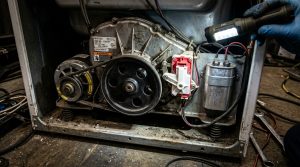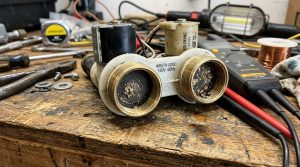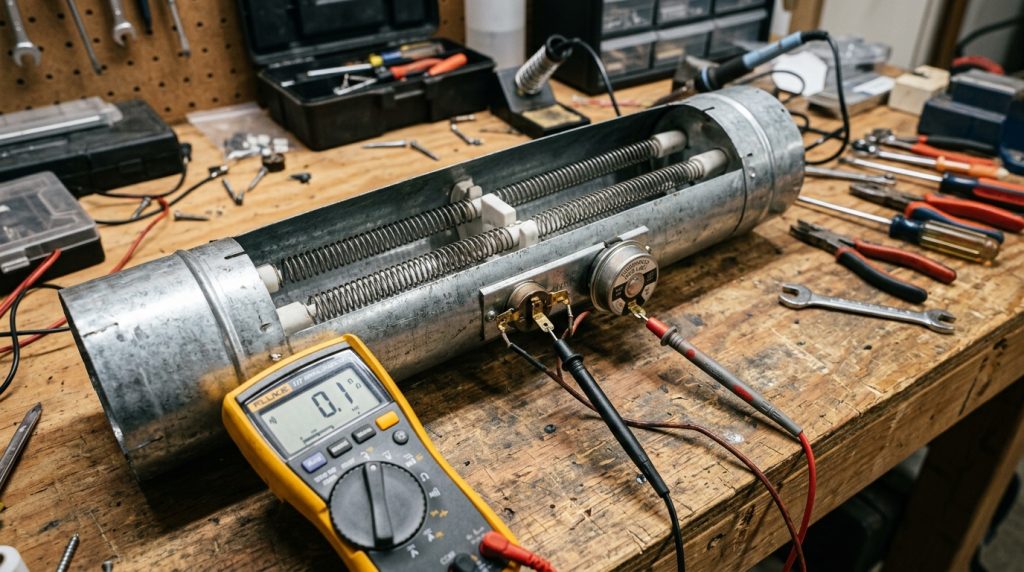
When an electric clothes dryer runs, tumbles smoothly, but produces zero heat—leaving clothes damp and freezing cold after a 60-minute cycle—homeowners often worry the entire appliance is ruined. In 90% of electric dryers (Whirlpool, Maytag, Kenmore, Samsung, LG, GE), the heat circuit consists of an unbroken series loop of safety thermal cutoffs and a nichrome resistance heating element. If any single component in this series loop fails, 240V power to the heating element is severed immediately for fire safety.
Step 1: The 4-Component Multimeter Continuity Test Matrix
To diagnose the exact failing part in under 10 minutes, unplug the 240V dryer power cord, remove the rear galvanized sheet-metal panel, and use a digital multimeter set to Continuity / Resistance (Ω). Important: Always disconnect at least one wire slip-connector from each component before testing to prevent false readings through adjacent wiring loops.
| Component / Test Point | Expected OEM Reading | Diagnostic Meaning & Action |
|---|---|---|
| Thermal Fuse (Blower Housing) | 0.0 Ω to 0.4 Ω (Beep) | PASS: Fuse is continuous. FAIL (O.L.): Blown by restricted exhaust vent (over 196°F). Replace fuse and clean exhaust pipe! |
| Heating Element Coil (Terminal to Terminal) | 7.8 Ω to 12.8 Ω | PASS: Nichrome element intact. FAIL (O.L.): Coil wire fractured. Replace heating element assembly. |
| Heating Element Terminal to Metal Casing | Infinite (O.L.) | PASS: No short to ground. FAIL (Below 100k Ω): Coil sagging against casing. Will cause breaker trip or runaway heat. |
| High-Limit Thermostat (Heater Housing) | 0.0 Ω to 0.4 Ω (Beep) | PASS: Normally closed at room temperature. FAIL (O.L.): Contacts burned open. Replace thermostat. |
| Cycling Thermostat / Thermistor | 0.0 Ω (or 10.0 kΩ if electronic thermistor at 77°F) | PASS: Temperature regulation sensor functional. |
Step 2: The Mandatory Exhaust Duct Cleaning Rule
If your multimeter reveals a blown thermal fuse (O.L.), do not simply install a new fuse and turn the dryer on. A thermal fuse is a one-time sacrificial safety device. It only blows when the internal temperature inside the blower chamber exceeds 196°F (91°C) due to restricted exhaust airflow.
- Disconnect the corrugated silver flexible transition duct from the wall exhaust collar.
- Inspect the exhaust duct running to your outside wall or roof vent cap.
- Use a rotating dryer vent cleaning brush and vacuum to remove all accumulated lint felt plugs.
- Confirm the exterior wall flapper damper opens freely and is not blocked by bird nests or lint screens.
OEM Replacement Part Information
Electric Dryer Heating Element & Thermal Fuse Safety Kits
Whirlpool / Maytag / Kenmore: OEM Heating Element #279838 (Replaces 279837, 3398064) & Thermal Fuse #WP3392519.
Samsung / LG: OEM Heating Element Assembly #DC47-00019A & Thermal Cut-Off Fuse #DC47-00016A.
Installation Time: 30 minutes with a 1/4″ and 5/16″ nut driver.
Connected Diagnostic Procedures & Next Steps
Dryer thermal fuses blow when un-evacuated water from laundry washers causes extreme cycle heat loads. Cross-reference these connected solutions:
Frequently Asked Questions
Why does the dryer drum still spin if the thermal fuse is blown?
On electric dryers, the drive motor operates on 120V AC, whereas the heating element requires 240V AC. Many brands wire the thermal fuse exclusively into the 240V heating leg, allowing the motor to tumble while safely isolating the heating coils.
Can I temporarily bypass the thermal fuse with a jumper wire to test?
Technicians may use a temporary jumper wire for a 15-second test ONLY to confirm heat ignition, but you must NEVER run a cycle with a bypassed fuse. Operating without a thermal fuse poses a severe structure fire hazard.